Antichrist & World Peace
The idea that the white horse rider in Rev. 6: 2 is the "Antichrist" is based upon the false notion that he will make some kind of phony "peace" agreement (treaty) with Israel and then break it. This idea is taken chiefly from a misinterpretation of the prophet Daniel's "seventy weeks" prophecy. (Dan. 9:24-27) Another is taken from Daniel 8: 25. Let us look at the latter first.
“And through his policy also he shall cause craft to prosper in his hand; and he shall magnify himself in his heart, and by peace shall destroy many: he shall also stand up against the Prince of princes; but he shall be broken without hand.” (Daniel 8: 25)
I do not doubt that this passage is a reference to the times of the Antichrist. Further, I do not deny that he will "by peace" bring the world to ruin. What that means exactly, however, is another matter.
Further, I do believe that the world will be enjoying "peace and safety" to a great degree at the time of the commencement of the day of wrath and tribulation.
What I oppose therefore, is not that the Antichrist will have some relationship to the peace and safety of the last days, and some peaceful means of gaining power, but what I oppose is the reading of all this into the text of Rev. 6: 2. The coming of the rider on the white horse of Rev. 6: 2 does not bring a previously unknown peace to people all over the world as the next several horses in heaven's cavalry demonstrate.
It is not correct to argue therefore that the peace supposedly brought by the coming of the white horse rider 1) comes from the Antichrist and 2) the peace and prosperity can only be fake or a delusion, perhaps some kind of "pipe dream."
This reasoning, however, fails. The white horse rider comes as a result of heaven's command, ergo, the peace came by heaven's order. Thus, it cannot be a fake peace unless one is also willing to affirm that God brings the fake peace of the Antichrist.
In the passage above "peace" is from the Hebrew "shalvah" and means quietness, ease, prosperity, security (genuine or false). The Antichrist "by peace" will "destroy." But, consider that there is nothing in the text that says that Antichrist will first bring world peace and prosperity and then be rewarded with sovereignty by the world (or "ten kings") for doing so.
The text could also well mean that Antichrist comes to power by first promising peace, a promise which he does not intend to keep. Thus, "by peace" he means "by the means of promising peace," or by tempting with peace talk, he will gain power, and then destroy. By this interpretation the Antichrist comes to power, not by bringing world peace, but by promising it (and giving some proof of his ability to bring it).
It very well may allude to the act of the Antichrist (beast) in killing the two witness prophets of Revelation chapter eleven. The two prophets "torment" the world with plagues and awful judgments, including the withholding of rain for the length of their prophecy. When the two prophets are killed by the Antichrist the world celebrates; And, who will get the glory for stopping these awful torments? The Antichrist! He "restores the peace and brings happy days once again," the world will think.
Further, from looking at the many passages dealing with the Antichrist we see his entire time on earth as characterized by nothing akin to peace. His rise will come by violence not by peace.
The "peace and safety" of the end times is not what is brought about by the Antichrist. That prophecy will have come to pass prior to the opening of the first seal and the coming forth of the first horse. Further, it can well be said that we have already to a great degree arrived at that point in history. People today, all around the world, enjoy better peace and safety than ever before. Yes, there will always be wars and rumors of wars. We have had those since the end of WWII. Yea, since the coming of Christ nearly two thousand years ago. Yet, people still feel safer and more prosperous today than ever before in human history.
If we allow that the Laodicean age of the church precedes the coming of the white horse rider of Rev. 6: 2, then we prove clearly that the "peace and prosperity" spoken of by Paul precedes the opening of the first seal. Further, that safety, peace, and prosperity is not what the Antichrist instantly brings, somehow, but is that which has come about as a result of science and technology.
The Laodicean church said this about themselves: "I am rich, and increased with goods, and have need of nothing" (Rev. 3: 17). They surely reflect that state of the world at the time of the end. It also surely describes the state of the church and world at this time. People today, like many Christians, and like the fool Jesus spoke about, "have ample goods laid up for many years" and therefore say to themselves "relax, eat, drink, be merry." (Luke 12: 19) And, since nearly everyone today denies the teaching of the Bible on Hell and eternal punishment, and of the coming judgment, and of the resurrection of the dead, they say “Let us eat and drink, for tomorrow we die.” (I Cor. 15: 32)
In the prophecy it is stated that Antichrist "through his policy" will "cause craft to prosper in his hand." There is no question but that the Antichrist will have an economic, as well as religious, political, and social, "policy." Craft is prospering now in the world on a scale never before seen, at least since the Deluge. And, the policy of the Antichrist will promise global peace and prosperity.
The Peace Of I Thess. 5:3
"For when they shall say, Peace and safety; then sudden destruction cometh upon them, as travail upon a woman with child; and they shall not escape."
This "peace and safety" prophecy is fulfilled in our very day. There will not be any greater peace and safety than men now enjoy, although Antichrist will promise them greater, and even increase it for a short time.
The Lord Jesus also spoke of this time of general world prosperity when he said:
"But as the days of Noah were, so shall also the coming of the Son of man be. For as in the days that were before the flood they were eating and drinking, marrying and giving in marriage, until the day that Noe entered into the ark, And knew not until the flood came, and took them all away; so shall also the coming of the Son of man be." (Matt. 24: 37-39)
Just as people were "living it up," feasting and "partying," before the flood, "eating and drinking" (no famine), "marrying" (little fear of the future), etc., so also now. But, the prosperity, peace and safety, of the very last days will be what Solomon called "the prosperity of fools" and which "shall destroy them." (Prov. 1: 29-33)
The Lord warned of this kind of end time prosperity when he said:
"And take heed to yourselves, lest at any time your hearts be overcharged with surfeiting, and drunkenness, and cares of this life, and so that day come upon you unawares." (Luke 21: 34)
In the next posting I will conclude this series on the white horse rider of Rev. 6: 2 with some thoughts on the Seventy Weeks of Daniel 9 and a summation. Following that I will take up an examination of the remaining horses of the Apocalypse.
Jun 5, 2020


White Horse Of The Apocalypse XIII
Saviors as Judges
"Nevertheless the LORD raised up judges, which delivered them out of the hand of those that spoiled them." (Judges 2:16)
"According to thy manifold mercies thou gavest them saviours, who saved them out of the hand of their enemies." (Neh. 9: 27)
"And saviours shall come up on mount Zion to judge the mount of Esau; and the kingdom shall be the LORD'S." (Oba 1:21)
In these passages the "saviors" were also the "judges." It was that way through the time of the judges in Israel's history, before she had her first king, and is described to us in the Book of Judges.
So too the second coming of Christ, when he comes riding forth as the mighty victor on his war steed, leading "the armies of heaven," he will come as both savior and judge.
As we have seen in regard to those texts that speak of "the arrows of the Almighty," they were both "arrows of salvation and victory" and "arrows of destruction." The coming of Christ will bring salvation to the elect and destruction to the reprobate. Amos the prophet spoke of this when he wrote:
"Woe unto you that desire the day of the LORD! to what end is it for you? the day of the LORD is darkness, and not light. As if a man did flee from a lion, and a bear met him; or went into the house, and leaned his hand on the wall, and a serpent bit him. Shall not the day of the LORD be darkness, and not light? even very dark, and no brightness in it?" (Amos 5: 18-20)
This is exactly what we see unfolding in the Book of Revelation. The return of the Lord will be a day of gloom, tribulation, and wrath for unbelievers. But, it will be a day of salvation and redemption for believers.
The Hebrew title is Sopetim [Shophetim], which is usually translated "judges" but the Hebrew word sopet not only caries the idea of administrating and maintaining justice but also has the meaning of "liberator" or "deliverer." Judges in Israel were also deliverers.
The Hebrew term shofet, which is translated into English as “judge,” is closer in meaning to “ruler,” a kind of military leader or deliverer from potential or actual defeat.
"James King West writes: "Our English word 'judge' fails to bring out the breadth of meaning encompassed in the Hebrew term shophet (from the verb shaphat, to 'judge,' 'justify,' or 'deliver'). The shophet, as the title is used in the Old Testament, is not in the first instance an arbitrator of legal disputes, though he (or she) might serve in that capacity (Jud. 4:4-5). He is, rather, one who defends the right or just cause, whether in the capacity of a juridical official who hears cases and renders judgments or as a military leader who throws off the oppressor of a victimized people. In either case, the results are the same: the punishment of the offender, the vindication of the innocent party, and the restoration of the right (just) order of things. The heroes of the Judges stories are chiefly military leaders or tribal champions who arose in hours of crisis to deliver their people from the hands of enemy oppressors. Their sole authority appears to have resided in their 'charismatic' (spirit-directed) personality, rather than in any hereditary or elected office. Powerfully courageous and zealous for the independence and well-being of the tribes, they rallied the necessary support to combat the recurring harassment and open attacks of nearby enemies: Canaanites, Moabites, Midianites, Ammonites, and Philistines." (Introduction to the Old Testament, p. 178)" (as cited here)
These words help us understand the context of the evils coming on the world as a result of the opening of the first four seals of the scroll of redemption, and the coming forth of "the armies of heaven" to bring judgment on unbelievers.
Notice these verses that connect the work of judging with that of delivering.
"From heaven you pronounced judgment, and the land feared and was quiet — when you, O God, rose up to judge, to save all the afflicted of the land." (Psalm 76:8-9)
"For the LORD is our judge, The LORD is our lawgiver, The LORD is our king; He will save us." (Is. 33:22)
In our day we do not generally associate a judge with being a savior. Of course, we are not talking about judges in sports competition (referees, umpires, etc.) but judges of men as respects law or statute breaking. Judges in some sense rule or govern people, they being essentially representatives of government, but the judges in Israel were less of the legal kind, they being more of a savior than of a decider of legal matters. But, even considering today's role of judges in the various courts, we can see two perspectives in regard to him. If we look at a judge from the perspective of the guilty, we will see him as one who punishes. But if we look at a judge from the perspective of a victim, or one oppressed, the judge is one who brings justice and vindicates, who "rights the wrongs," etc.
When God saves the ones being wronged from those who are wronging them, he is both judging and saving at the same time — bad news for one side, good news for the other.
The word "judge" is used two times in the Apocalypse in regard to Christ acting as judge of all.
"And they cried with a loud voice, saying, How long, O Lord, holy and true, dost thou not judge and avenge our blood on them that dwell on the earth?" (6: 10)
"And I saw heaven opened, and behold a white horse; and he that sat upon him was called Faithful and True, and in righteousness he doth judge and make war." (19: 11)
Notice how Christ is both judge and avenger, both savior and destroying warrior. The Lord in his coming again, leading heaven's armies, will "judge and avenge" and "judge and make war." Christ is to be viewed in his Apocalypse as both Judge and Savior as he and his judgments are revealed from scene to scene.
We have already seen how his role as Redeemer is also prominent in the Apocalypse and have seen how the work of a redeemer or near kinsmen (Hebrew "goel") was not only to deliver the family member sold into slavery, but also to bring just punishment or retribution to those who may have victimized an innocent family member. In this respect he was the "Avenger."
He is also seen in the Apocalypse in his role as "Lord." The idea of ruling and governing with authority is involved in the word "lord." So too is the idea of ownership and sovereignty.
God On The March
"LORD, when thou wentest out of Seir, when thou marchedst out of the field of Edom, the earth trembled, and the heavens dropped, the clouds also dropped water." (Judges 5: 4)
"O God, when thou wentest forth before thy people, when thou didst march through the wilderness; Selah: The earth shook, the heavens also dropped at the presence of God: even Sinai itself was moved at the presence of God, the God of Israel." (Psalm 68: 7-8)
"Thou didst march through the land in indignation, thou didst thresh the heathen in anger." (Hab 3:12)
"March" may be translated as "stepped through and upon." Similar words are "tread" or "trample" or "run over."
"Through God we shall do valiantly: for he it is that shall tread down our enemies." (Psa. 60: 12)
This is what we see in Christ's Apocalypse, in the opening of the seals. As each seal is opened and each disaster occurs we see Christ marching through our world. Each scene of destruction is but one "step" in the Lord's march in war.
"There is one Lawgiver, who is able to save and to destroy." (James 4: 12)
Notice again how in these words both salvation and destruction are connected together, although in this instance he is styled the "Lawgiver."
Lord as Vanguard & Rear Guard
"The Lord will go before you (vanguard); and the God of Israel will be your rereward (rear guard)." (Isa. 52: 12)
More than once did the Lord go out before his people to defend them in battle. In those cases the Lord was acting as a "vanguard" for his people.
Vanguard is an old variation of the French word avant-garde meaning "fore-guard" or "front guard." The leading units moving at the head of an army are its vanguard. The word may also allude to the leading position in any movement or field.
"And the Angel of God, who went before the camp of Israel, moved and went behind them; and the pillar of cloud went from before them and stood behind them." (Exodus 14: 19)
(See my study on this here)
Christ is vanguard and rear guard in the Apocalypse. He begins the final conflict and he brings it to an end. He is the Alpha and Omega, the beginning and the ending, the first and the last, and, "in all things he must have the preeminence." (Col. 1: 18)
In those Apocalyptic scenes the Lord Jesus Christ, both defends heaven's rule and the people of God, keeping them safe, as well as condemns (as judge and lawgiver) and destroys (as the warrior prince).
Jun 4, 2020
White Horse Of The Apocalypse XII
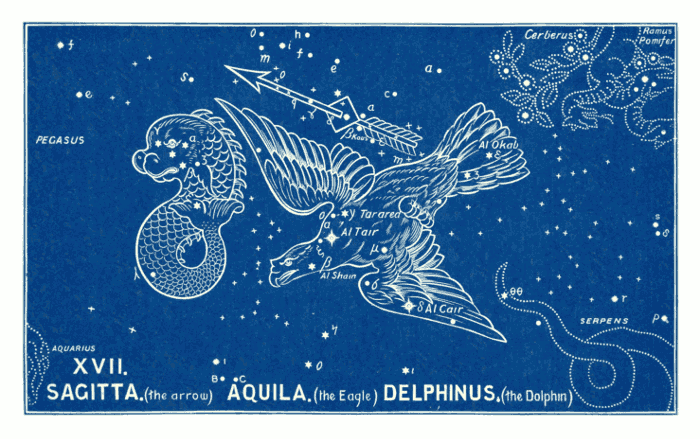
Sagitta - THE ARROW
"The LORD’s arrow of victory"
"But God will shoot at them with an arrow; Suddenly they will be wounded."
(Psa. 64: 7)
"And he said, “Open the window eastward,” and he opened it. Then Elisha said, “Shoot,” and he shot. And he said, “The LORD’s arrow of victory, the arrow of victory over Syria! For you shall fight the Syrians in Aphek until you have made an end of them.” (2 Kings 13:17)
There can be no victory for the Lord and for his people without defeating the enemies of the Lord and his people. A winner implies a loser, and vise versa. The same divine act that delivers the Israelites and gives them victory destroys the enemies of Israel. The victory of the Lord and his people is defeat for the enemies of God and righteousness.
Peace results from the firing of this swift and mighty arrow of wonderful victory. There can be no peace while there are enemies seeking to destroy you and it. To have peace, those enemies of God and peace must be destroyed. When peace is not desired by an enemy, and when an enemy wants only to kill you, you can only have peace and safety when that enemy is destroyed. Said the Psalmist:
"My soul hath long dwelt with him that hateth peace. I am for peace: but when I speak, they are for war." (Psa 120: 6-7)
The devil will not ever make peace with God or confess his sin, and the same is it with sinful fallen man who lives under the power of "the spirit that now works in the children of disobedience" (Eph. 2: 2), i.e. the spirit of Satan. Sinners do not want to make peace with God nor turn away from their sinful passions and world philosophy. They hate true peace.
So too in the Apocalypse and "final conflict" between heaven's forces and the forces of evil, peace comes (Rev. 20-22), but only after the evil world has been destroyed by the arrival of God's arrows of end time judgment.
Some translations give "arrow of deliverance" (or salvation) or "arrow of victory" (or triumph). God's "arrow of victory" denotes an "arrow of death," an "arrow of justice," an "arrow of destruction" in relation to those who are its target. The same arrow that delivers one destroys another so that it is both an arrow of salvation to one class and an arrow of destruction to another.
These arrows of coming wrath and judgment are "targeted," and not simply shot randomly ("at a venture"; I Kings 22: 34). God's arrows are "seek and destroy" missiles.
Wrote the prophet Zechariah:
"Then said he unto me, This is the curse that goeth forth over the face of the whole earth: for every one that stealeth shall be cut off as on this side according to it; and every one that sweareth shall be cut off as on that side according to it. I will bring it forth, saith the LORD of hosts, and it shall enter into the house of the thief, and into the house of him that sweareth falsely by my name: and it shall remain in the midst of his house, and shall consume it with the timber thereof and the stones thereof." (Zec 5: 3-4)
If we view "the curse" metaphorically as "arrows of the Almighty," then indeed they will "seek and destroy" those against whom they are aimed. That arrow will hunt for and find its target! God does not miss the mark. Interesting is the fact that the Greek word for "sin" is "hamartia" which means to miss the mark! It is used in Judges 20: 16 (Septuagint) to describe stone throwers who did "not miss" their mark.
"Thine hand (or arrow) shall find out all thine enemies: thy right hand shall find out those that hate thee. Thou shalt make them as a fiery oven in the time of thine anger: the LORD shall swallow them up in his wrath, and the fire shall devour them. Their fruit shalt thou destroy from the earth, and their seed from among the children of men." (Psa 21: 8-10)
Like God's "hand," so his arrows of justice will "find out," or "seek and destroy," all his enemies, all those under his wrath. And, upon whom does the "wrath of God" abide? John wrote:
"He who believes in the Son has everlasting life; and he who does not believe the Son shall not see life, but the wrath of God abides on him.” (John 3: 36)
These are they who are destroyed when Christ returns to "judge the living and the dead." Wrote Paul:
"And to you who are troubled rest with us, when the Lord Jesus shall be revealed from heaven with his mighty angels, In flaming fire taking vengeance on them that know not God, and that obey not the gospel of our Lord Jesus Christ: Who shall be punished with everlasting destruction from the presence of the Lord, and from the glory of his power; When he shall come to be glorified in his saints, and to be admired in all them that believe (because our testimony among you was believed) in that day." (II Thess. 1: 7-10)
Satan is said to shoot his "fiery darts" (Eph. 6:16), or "the flaming missiles" (Amplified) or "every burning missile the enemy hurls at you" (Phillips).
"Fiery darts" or "arrows" is from the Greek "belos" and "is literally something thrown (pointed weapon, arrow, dart). This is the only NT use of belos which is found 34 times in the Septuagint (LXX)."
The flaming missiles of Satan are deflected by those who have and use "the shield of faith" (Eph. 6:16). Certainly they do not compare to the missiles of Jehovah! The enemy of God has no shield that can stop those missiles!
Swift Justice
"He sendeth forth his commandment upon earth: his word runneth very swiftly." (Psa. 147:15)
In Sagitta, we see the invisible God's "arrow of victory and salvation" in the heavens, reminding us of the reign of God's justice and righteousness. That heavenly arrow is associated with power and authority, with majesty and sovereignty, and with swiftness of execution. When God gives the order to his angels or messengers of Providence to execute sentence, or carry out his orders, then those agents act quickly in apprehending (seizing or nabbing) the rebels, and "executing the judgment written" (Psa. 149: 9) Wrote Solomon:
"Because sentence against an evil work is not executed speedily, therefore the heart of the sons of men is fully set in them to do evil." (Ecc. 8: 11)
The fact that the day of wrath, though threatened in the long ago, has not yet occurred, has led sinful man to think that he may never be arrested by God. So, today, after about six thousand years since the fall of Adam, men's hearts are indeed "fully set in them to do evil." God's longsuffering and forbearance with sinners will one day end and then the "sentence against" the sinner and his "evil work" will be "executed speedily." So said Jesus too.
"And shall not God avenge his own elect, which cry day and night unto him, though he bear long with them? I tell you that he will avenge them speedily." (Luke 18: 7-8)
God's time of longsuffering is a reason for the seeming delay in God's speedy execution of just vengeance and retribution (for his not yet bending his bow) upon the wicked, and the purpose behind that forbearance is twofold. First, God's delay in execution, or his waiting, is so that the wicked might turn from his sin, and seek peace, reconciliation, and forgiveness with his Creator. Second, it is so that the wicked world may reach that point, in their sins and rebellion against God, "of no return." To use the language of scripture, it will be when the iniquity of the world is "full" or "filled to the brim" with rebellion against the Lord and his word. (See Gen. 15: 16 and Matt. 23: 32)
Said the prophet Jeremiah: "It is of the Lord's mercies that we are not consumed, because his compassions fail not." (Lam. 3: 22) Each day that passes shows that God is now "reserving" his execution and being merciful and compassionate.
Who or what are the targets of the arrows of the Apocalypse, shot from the toxon of the mighty victorious warrior on the war steed? Who suffers the judgments that follow the first seal's opening? They are these:
Unbelievers
Persecutors of Believers
Ungodly people
Wicked rulers
Antichrist
False Prophet
Satan
Also, even earth itself, with its animals and vegetation, become targets as the seals following the first are opened.
The arrow of Sagitta is viewed as naked and alone, without bow, archer, or quiver. Yet, they are implied. The arrow does not seem to be pointed at anyone particular star or constellation, in other words, against no specific target. It seems as though its presence in the starry heavens, as such, does not mean that it is not directed (shot at random) but may simply denote that it is prepared to be directed and redirected, like today's "guided missiles."
The shooter of this arrow is invisible. Yet, the nature of the arrow itself reveals the identity of the shooter. He is not Apollo nor Cupid. He is rather "the invisible God."
SAGITTA (Ltn) “the arrow”; Sham (Hbrw) “destroying, desolate”
Wrote Seiss in "Gospel of the Stars":
"The first is Sagitta, the shot and killing arrow. It appears naked and alone. It has left the bow, and is speeding to its aim. It is a heavenly arrow, and He who shoots it is invisible. There is a majesty and a mystery about it which startles and awes. It is the death-arrow of almighty justice, which goes forth from the throne against all unrighteousness and sin. It is that death-inflicting instrument which comes with resistless force and sharpness against a world that lieth in sin, and which pierces the spotless Son of God as found in the place of guilty and condemned man. The execution it does is shown in the fallen and dying goat. It is the arrow of divine justice and condemnation upon sin piercing through the body and soul of the meek Lamb of God, who agreed to bear our sins and answer for them.
But this Arrow doubtless covers a further idea. There is a spiritual piercing and slaying in the case of those who come to new life in Christ, akin to the piercing and slaying of Christ himself. Sharp and hurtful words are compared to arrows. And of this character are the words of God as pronounced upon the wicked, judging and condemning them for their sins, bringing them down from their lofty self security, and killing out of them the vain imaginings in which they live. Isaiah speaks of this sort of shaft or arrow in the Lord's quiver — the arrow of the Word — the arrow of conviction of sin, righteousness, and judgment — a wounding and killing arrow which enters into men's souls, and makes humble penitents of them, that they may come to life in Christ."
White Horse Of The Apocalypse XI
SAGITTARIUS - THE ARCHER
"the gracious one - the redeemer's triumph"
Star Names
"He determines the number of the stars; he gives to all of them their names." (Psa. 147: 4)
"Lift your eyes and look to the heavens: Who created all these? He who brings out the starry host one by one, and calls them each by name. Because of His great power and mighty strength, not one of them is missing." (Is 40:26)
"And God said, Let there be lights (stars) in the firmament of the heaven to divide the day from the night; and let them be for signs, and for seasons, and for days, and years." (Gen. 1:14)
When the Lord gives something a name, that name becomes significant. It often can not only describe the thing named, but be prophetic. Names given to Old Testament heroes of the faith at their births were often such. The name "Joshua" (which is the same as "Jesus"), the assistant of Moses, was prophetic of his role of a deliverer of Israel.
Of course, we cannot be any more certain of the meanings of those star names and constellations without knowing their original. The oldest Zodiacal star names must take precedence over changes made by later peoples, especially the names of those stars in Hebrew. Studying those ancient star names will bring one to see clearly how those starry designations and arrangements were truly "for signs."
Truly the constellation signs tell of the coming of the "seed of the woman" and of his conflict with the "old serpent, the devil."
Wrote one author on the subject (here):
"The theory of “the gospel in the stars” is that God actually named the brightest stars and major constellations long, long ago, back in the earliest generations of humanity. He did this to tell an important story: stringing these constellations together, they foretell the message of the gospel.
A similar alternative theory is that God communicated his plan of redemption to the earliest people (to people like Adam or Seth) and they named the stars as a witness to this plan.
For instance…
Virgo represents the virgin who would give birth to the promised Messiah.
Capricornus represents the goat of atonement, slain for the redeemed.
Orion represents Christ, the heavenly light of the world.
Leo is the lion of the tribe of Judah.
…and so on.
Under this theory, early human cultures understood these original pictures in the sky, but then some time after the Flood, as sinful human beings spread all over the world, they attached their own names to the stars, and thus the pagan practices of astrology began.
This theory became popular in the late 1800s. Ms. Frances Rolleston’s book, Mazzaroth, published in the 1860s, was the first to propose this theory. Joseph Seiss’s book, The Gospel in the Stars, came out about 20 years later. E.W. Bullinger’s book, The Witness of the Stars, came out the last decade of the 19th century. The theory also has a number of modern proponents, probably the most famous being Dr. D. James Kennedy."
Wrote another in "Mazzaroth – Story in the Sky" (here):
"The Hebrew name for the zodiac is the Mazzaroth. Amazingly, is it possible that the twelve constellations in the Hebrew Zodiac (Mazzaroth) tell a fascinating story of God's plan for mankind's redemption?
1. Virgo – The virgin holding a branch and an ear of corn; the promised seed of the woman.
2. Libra – The scales; the price deficient balanced by the price that covers.
3. Scorpio – The scorpion; the attack of the enemy; the redeemer's conflict.
4. Sagittarius – The archer; the gracious one; the redeemer's triumph.
5. Capricornus – The sea goat; the goat of atonement slain for the redeemed.
6. Aquarius – The water bearer; the living waters of blessing poured forth for the redeemed.
7. Pisces – The fishes; the multitudes who will follow; the blessings of the redeemed.
8. Aries – The ram or lamb; wounded and slain, the blessings of the redeemed consummated.
9. Taurus – The bull; the congregation of the judge; the coming judge of all the earth.
10. Gemini – The twins; two natures; the reign of the prince of peace.
11. Cancer – The crab; assembled together; the redeemer's possessions held fast.
12. Leo – The Lion of the tribe of Judah; the consummated triumph of the redeemer in the end."
Notice that Sagittarius means "The archer; the gracious one; the redeemer's triumph."
That is exactly how Christ as the rider on the white horse is described. The entire Apocalypse of Christ as pictured in Rev. 6: 2 and 19 shows him acting as a "redeemer" in "the day of redemption."
Author of many well known books, J. A. Seiss in "Gospel in the Stars" (here) wrote:
"And thus the "arrows" of the divine Hero of the text "are sharp in the heart of the King's enemies." His war is with the whole Serpent-brood, and His going forth is for their destruction. Whether we understand it of the moral and renovating power of the Gospel, or of the judicial administrations of the Son of man at the end of the present Gospel dispensation, or more naturally of both, it is the office and purpose in all the doings of the glorified Christ to pierce and wound the Serpent, to destroy all his works and power, and to disable him for ever. And this is shown in the sign, just as it is declared in the Gospel." (pg. 41)
Seiss also wrote:
"Swiftness is another idea included in these names; and hence of quick and resistless power, of which horses and horsemen are the biblical images, particularly in connection with the scenes of the great judgment which Christ is appointed to enact. And the coming again of Christ is everywhere described as being with great power and glory, quickly, suddenly, like the lightning's flash."
The Arrow of the Archer is pointed at the heart of the Scorpion (star "antares" meaning "wounding"). That is significant. Notice these passages.
"Behold, I have given you authority to tread on serpents and scorpions, and over all the power of the enemy, and nothing will injure you." (Luke 10:19)
"Thou shalt tread upon the lion and adder: the young lion and the dragon shalt thou trample under thy feet." (Psalms 91:13)
"To tread on serpents and scorpions. The promise is doubtless literal, so far as necessary to manifest higher spiritual power. In view of the connection we must accept an allusion to Genesis 3:15 : ‘bruise the head of the serpent,’ and perhaps to Psalms 91:13 also." (Schaff's Popular Commentary on the New Testament)
In the star-picture of Scorpio we see a gigantic scorpion endeavoring to sting the heel a mighty man who is struggling with a serpent, but is rather crushed by the man, who has his foot placed right on the scorpion's heart. In one scene the foot of the glorious seed of the woman is seen in the act of stepping on the head of the scorpion and in the other we see him as an archer shooting his arrow at the heart of the scorpion. The Hebrew name is Akrab, which is the name of a scorpion, but also means 'the conflict,' or 'war.' The Coptic name is Isidis, which means 'the attack of the enemy,' or 'oppression;' referring to 'the wicked that oppress me, my deadly enemies who compass me about' (Ps. 27:9). Said Paul:
"And the God of peace shall bruise Satan under your feet shortly. The grace of our Lord Jesus Christ be with you. Amen." (Rom. 16: 20)
In "The Witness of the Stars" E.W. Bullinger wrote:
"The names that God gave to the stars and the constellations was revealed to Adam, Seth, Enoch, and the first patriarchs of our race. The same is true with the gospel message that was revealed to those ancient prophets and which, together with the names God had given of the stars; it was written in "twelve chapters," each chapter being one of the twelve drawn constellations (or "houses") with their Decans. Starting from Virgo and going all the way around to Leo one will have the gospel story of the Messiah.
Of the major stars in Sagittarius and their star names and meanings:
1. "Vega" (the North Star) means "He shall be exalted, the warrior triumphant"
Is that not what Christ's appearance on the white horse demonstrates?
2. "Naim" means "the gracious One"
Again, all the scriptural testimony is to this fact about the character of the promised victor.
3. "Nehushla" means "the going, sending forth"
Is that not we see in Rev. 6: 2 when heaven says to our Lord "go"? He is the one who was sent here in his incarnation and who is to come a second time. He is throughout the scriptures called "the coming one." All these terms are likewise descriptions of Christ, the "seed of the woman," as are found in the scriptures.
Decans of Sagittarius (associated constellations)
1. Lyra – the harp (denoting praise for the triumph of the warrior prince)
2. Ara – the altar (turned upside down and spewing out a fiery deluge denoting wrath poured)
3. Draco – the dragon (like serpent, hydra, and scorpion, a symbol of Satan)
The constellation names are:
• Latin is Sagittarius, meaning “archer.”
• Hebrew & Syriac is Kesith, meaning “the archer.”
• Arabic is Al Kaus, meaning “the arrow.”
• Coptic is Pimacre, meaning “the graciousness, or beauty, of the coming forth.”
• Greek is Toxotes, meaning “the archer.”
Al Shaula (Arabic for “the dart”),
Al Warida (Arabic for “who comes forth”),
Ruchba er rami (Arabic for “riding of the bowman”),
Nun-ki (Akkadian for “Prince of the earth”) and in the Denderah he is called Pi-maere (same as Coptic- “beauty of the coming forth”).
These names give us a clear indication that the rider is the “beautiful bowman” who is “riding forth” to conquer Satan and redeem His loved ones at His second coming (Rev 19:11).
Dr. D. James Kennedy, who also believed that Rev. 6: 2 referred to Christ, also spoke on Sagittarius being an emblem of the Messiah as he comes to destroy the serpent and his brood. (see here)
Jun 3, 2020
Rioters Can Gather But Not Christians?
"Be astonished, O ye heavens!" (Jer. 2: 12) at the height of the hypocrisy evident in our day, both among politicians, citizens, and many Christian communities! In the present Coronavirus pandemic and rioting (not only in America but in many other countries) we see so much hypocrisy among our political leaders!
Let the rioters gather and break the pandemic restrictions, but send police cars to churches to arrest churches that refuse "the king's commandment." Such hypocrisy is a stench in the nostrils of God and he has about had enough.
Murder babies in the womb by the millions and then talk about how much you value saving people from the Conronavirus! Such hypocrisy!
Well should all protesters keep these words in mind:
“Do not follow the crowd in doing wrong. When you give testimony in a lawsuit, do not pervert justice by siding with the crowd." (Exo. 23: 2 NIV)
Are we headed for "mob rule" in America? In the world? Is this what is signified by the rider on the red horse (Rev,. 6)? That rider "takes peace from the earth" which leads to people slaughtering one another. Are we seeing a small preview of this in our time?
Angelic Preaching In The Last Days
"And I saw another angel fly in the midst of heaven, having the everlasting gospel to preach unto them that dwell on the earth, and to every nation, and kindred, and tongue, and people, Saying with a loud voice, Fear God, and give glory to him; for the hour of his judgment is come: and worship him that made heaven, and earth, and the sea, and the fountains of waters." (Rev. 14: 6-7 KJV)
There is so much exciting and somewhat mysterious information about coming events in these words of the Apocalypse. Not only that, but contemplating their significance brings one to think about several other important ideas dealing with theology, especially with issues relative to God's providence and to soteriological questions.
Wonderful and Spectacular
An angel preaching from the skies with a voice that is heard by every person on the planet? Is that not wonderful and spectacular? Selah. What a way to preach the gospel! No missionaries needed! No preachers needed! All are hearing God speak from heaven (through the angel) just as miraculously as the Israelites heard the voice of God at Mt. Sinai. Surely this all makes one think of the words of Jesus who prophesied of his second coming saying "And this gospel of the kingdom will be preached in all the world as a witness to all the nations, and then the end will come." (Matt. 24:14) Though we have looked for the fulfillment of this in the preaching of the gospel by human agents, we cannot exclude it being finally fulfilled in the text under consideration.
Questions raised
1) Seeing God is able to preach the gospel to all in such a manner, why has he not done this before, thus not leaving any to die without hearing?
2) Will the angel preaching in the day of judgment have better effect in bringing about repentance than that of the prophets and apostles?
Our text also makes me think of the words of the Apostle Paul who wrote:
"But though we, or an angel from heaven, preach any other gospel unto you than that which we have preached unto you, let him be accursed." (Gal. 1:8 KJV)
But, we can be sure that the angel of Rev. 14: 6-7 will preach the same gospel!
What think ye?
I Can Almost Hear God's Two Apocalyptic Prophets
The "Two Witnesses" of Revelation chapter 11 (who I believe firmly are Elijah and John the Apostle - see my postings on this in the Archives) will soon begin their prophesying in Jerusalem. Besides inflicting the evil world with awful plagues and judgments, they will have plenty to say to the whole world! I may live and survive long enough to be here when they begin to prophesy. Over the years I have mused often upon what they will say for those three and one half years of their ministry.
Surely they will reveal to the world the why of what is going on in the world. They will be witnesses against the sins of the world and of the Jews. They will announce further coming judgments and call for repentance. What think ye?
Surely they will reveal to the world the why of what is going on in the world. They will be witnesses against the sins of the world and of the Jews. They will announce further coming judgments and call for repentance. What think ye?
God's Word To Cities In Crisis
9 Listen! The Lord is calling to the city—
and to fear your name is wisdom—
“Heed the rod and the One who appointed it.[b]
10 Am I still to forget your ill-gotten treasures, you wicked house,
and the short ephah,[c] which is accursed?
11 Shall I acquit someone with dishonest scales,
with a bag of false weights?
12 Your rich people are violent;
your inhabitants are liars
and their tongues speak deceitfully.
13 Therefore, I have begun to destroy you,
to ruin[d] you because of your sins.
14 You will eat but not be satisfied;
your stomach will still be empty.[e]
You will store up but save nothing,
because what you save[f] I will give to the sword.
15 You will plant but not harvest;
you will press olives but not use the oil,
you will crush grapes but not drink the wine.
(Micah 6: 9-15 NIV)
How appropriate are these words to our times!
Heed the word of God!
Repent and turn to God!
Hear the rod!
Nearly all the preaching and counseling that I see coming from the Christian clergy, in the midst of the Corona Virus and widespread civil disturbance, lacks a call on sinners to repent and does not give warning.
White Horse Of The Apocalypse X

Christ The Archer
"the Son of God goes forth to war"
"he ordaineth his arrows against the persecutors."
Wrote Dr. Henry M. Morris:"he ordaineth his arrows against the persecutors."
"At this tremendous moment in history, "the Son of God goes forth to war," as the Lamb breaks the First Seal. The seven seal judgments follow, then the seven trumpets , then the seven bowls. However the seventh seal includes all of the seven trumpets and the seventh trumpet leads into the seven bowls. The entire series thus represents the Lamb's successive forays into the invader's strongholds until finally the enemy is driven out completely. The climax comes at the battle of Armageddon, when the great Rider appears once again on His white horse to win the final victory (Revelation 19:11, 19)." (As cited here)
This is good commentary on what the appearance of the Son of God, or Lamb, in his first appearance as the white horse rider, signifies. His first appearance in vision signals the beginning of that "war" of all wars, or "war to end all wars," while his second appearance (Rev. 19) signals the end of it.
As each seal is opened things happen on earth that fulfill what the scriptures describe relating to the day of judgment, the day of wrath and tribulation, and the day of redemption. Each act and each scene are scenes of just retribution and vengeance upon wicked inhabitants who refuse to acknowledge God and his righteous judgments.
Commenting on Revelation 6:2, Dr. Henry M. Morris says the following:
"he that sat on him. Many futurist commentators take the rider on the white horse to be the Antichrist, who they say is seeking to imitate Christ, who is certainly the conquering Rider on the white horse in Revelation 19:11. This interpretation seems inappropriate. The coming Antichrist is not a “false Christ,” pretending to be Christ, but is the ultimate Antichrist, openly opposing Christ and seeking to destroy all Christian believers and everything for which Christ stands. The Antichrist, or Beast, will receive his power and authority from Satan (Revelation 11:7; 13:7), not Christ."
I think I have shown how the Antichrist view of Rev. 6:2 is not sound interpretation. The arguments made to supposedly prove it have all been shown to be untenable.
Morris continued:
"The proper interpretation is to view Christ as the rider; remember also that each judgment of the seven seals is sent forth by Christ, not Satan. Furthermore, it is eminently fitting that the conquering Christ should be seen as riding forth both at the beginning of His cleansing judgments on the earth, and then again at their climactic completion (Revelation 6:2; 19:11). Throughout the events of Revelation 6 through 19, as the successive seal judgments are sent forth, He is gradually “conquering” and is destined finally “to conquer” completely." (see here)
Though I once leaned towards the Antichrist view, yet after nearly fifty years of meditation and research on the text, I have come to see just exactly what Dr. Morris has here stated as being the most obvious interpretation of the passage. What he here says is exactly what I have been trying to demonstrate throughout this series.
In Rev. 19: 11 it is said that Christ, as the white horse rider, "in righteousness (or justice) judges and makes war." When did this righteous war begin? Who began it? Did it first start in Rev. 19 when the last seal has been broken and all of its seven woe trumpets have been blown and their effects realized? Surely not. Surely it began with the opening of the very first seal! And as each seal is opened, there is more victory by the heroic warrior prince who continues going forth "conquering," overcoming and gaining victory after victory. The four horsemen of the Apocalypse of Christ show the initial attack of this mighty warrior who has his name "the Word of God."
Notice how both "judging" and "making war" are connected together in the words "in righteousness he judges and makes war." The one judging is also the one leading military action. This signifies that the "day of judgment" runs along with the "war" being described.
Christ, in his apocalypse, fulfills several roles (or we might say "wears many hats"), such as being a judge, warrior or combatant, redeemer, savior, etc. As judge he gives sentence. As Governor and Lord he executes that sentence.
God's Poisoned Arrows
"For the arrows of the Almighty are within me, Their poison my spirit drinks; The terrors of God are arrayed against me." (Job 6: 4 KJV)
"The arrows of the Almighty are in me, my spirit drinks in their poison; God's terrors are marshaled against me." (NIV)
Job was a righteous man. None of the afflictions and sufferings that he experienced were the result of his sin. They did not show that he was God's enemy, as his friends supposed. No, he was God's close friend. But, he indeed was treated by God as if he were an enemy (to a large degree). Job was an enemy in appearance, judging by his circumstances. After all, "the arrows of the Almighty" with its "terrors" and "poison" are intended for the wicked, not for the righteous, as Job was.
Job's case is unique. God has a purpose for Job suffering some of these arrows of judgment and destruction from God's bow of justice. It is in some respects the same with these same arrows that were shot at the Lord Jesus by divine justice in his sacrificial death. In the case of Jesus it was justice meted out, not against him personally, for he was sinless, but against him as the bearer of the sins of the world. In the case of Job, God makes use of Job to demonstrate the truth of God and the falsehood of Satan the accuser.
Notice what God says to Satan about why Job experiences arrows of judgment, that are intended for the wicked only, but nevertheless experienced by this righteous man:
"And the LORD said unto Satan, Hast you considered my servant Job, that there is none like him in the earth, a perfect and an upright man, one that fears God, and eschews evil? and still he holds fast his integrity, although you move me against him, to destroy him without cause." (Job 2: 3)
God was moved to be "against" righteous Job, to "destroy" or "undo" him, but it was "without cause," meaning it was not what was due Job because of his sin, but in order for God to accomplish his purpose in 1) Sanctifying Job (by the fires of his trials, purging him) and 2) demonstrating both the Deity's character and that of Satan the accuser.
The main point in citing these words of Job is to show that God has from the morning of time been viewed as an Archer shooting deadly arrows at his foes. It is also to show how the metaphor of God shooting arrows denotes his sending of evils upon a man in just retribution for his rebellion against his Maker. In the Book of Revelation we may see each scene of destruction as the result of the shooting of these arrows of justice.
Notice that Job speaks of God's arrows as connected with "terrors" being "marshaled" or "arrayed" against him. These words are of a military nature denoting the assembling or arranging in order and rank, the various weapons and ordinance intended for use in conflict. The Hebrew verb means "to set in battle array." "The figure in the end of the verse is that of a beleaguering army; this host is composed of “terrors” from God. The reference is again not to Job’s mere physical pains, but to the perplexing thoughts and fears which they occasioned." (Cambridge Bible for Schools and Colleges)
Is this not what we see as each seal of the scroll is unbroken? Do we not see a "marshaling" of heavenly forces against the evil world and its wicked inhabitants? Are not the red, black, and pale horses a "marshaling" of terrors and punishments?
"The “arrows” of God are the plagues, diseases and pains with which He assails men, ch. Job 16:12 seq.; cf. Psalm 38:2 seq.; Deut. 32:23. So Hamlet, 'The slings and arrows of outrageous fortune.'"
Jeremiah, like Job, also spoke of Lord God having bow and arrows and of having had some of those arrows shot at him.
“He hath bent His bow, and set me as a mark for the arrow. He hath caused the arrows of His quiver to enter into my reins. I was a derision to all my people; and their song all the day.” (Lamentations 3:12-14)
Many Christians have seen the experience of being under deep conviction of sin as the result of having become "wounded" in spirit by the word and Spirit of God. This seems to be the meaning of the prophet in this passage. Still, the primary "mark" for God's arrows are for the wretched guilty world in the day of judgment.
Is the figure of being shot by God's arrow a type of being convicted of sin? Of being saved? Is God like Cupid?
Moses' Prophecy of Judgment Arrows
"They have moved me to jealousy with that which is not God; they have provoked me to anger with their vanities: and I will move them to jealousy with those which are not a people; I will provoke them to anger with a foolish nation. For a fire is kindled in mine anger, and shall burn unto the lowest hell, and shall consume the earth with her increase, and set on fire the foundations of the mountains. I will heap mischiefs upon them; I will spend mine arrows upon them. They shall be burnt with hunger, and devoured with burning heat, and with bitter destruction: I will also send the teeth of beasts upon them, with the poison of serpents of the dust. The sword without, and terror within, shall destroy both the young man and the virgin, the suckling also with the man of gray hairs." (Deut. 32: 21-25)
"See now that I, even I, am he, and there is no god with me: I kill, and I make alive; I wound, and I heal: neither is there any that can deliver out of my hand. For I lift up my hand to heaven, and say, I live for ever. If I whet my glittering sword, and mine hand take hold on judgment; I will render vengeance to mine enemies, and will reward them that hate me. I will make mine arrows drunk with blood, and my sword shall devour flesh; and that with the blood of the slain and of the captives, from the beginning of revenges upon the enemy. Rejoice, O ye nations, with his people: for he will avenge the blood of his servants, and will render vengeance to his adversaries, and will be merciful unto his land, and to his people." (Duet. 32:39-43)
Ezekiel's Prophecy of Judgment Arrows
"When I send against them the terrible arrows of famine which shall be for destruction, which I will send to destroy you, I will increase the famine upon you and cut off your supply of bread: So I will send against you famine and wild beasts, and they will bereave you. Pestilence and blood shall pass through you, and I will bring the sword against you. I, the LORD, have spoken." (Ezekiel 5:16-17)
"Even though Noah, Daniel, and Job were in it, as I live," says the Lord God, "they would deliver neither son nor daughter; they would deliver only themselves by their righteousness." For thus says the Lord God: "How much more it shall be when I send My four severe judgments on Jerusalem—the sword and famine and wild beasts and pestilence—to cut off man and beast from it?" (Ezek 14:20-21)
Psalms Prophecy of Judgment Arrows
"God judgeth the righteous, and God is angry with the wicked every day. If he turn not, he will whet his sword; he hath bent his bow, and made it ready. He hath also prepared for him the instruments of death; he ordaineth his arrows against the persecutors." (Psa. 7: 11-13)
"He sent out His arrows, and scattered them, And lightning flashes in abundance, and routed them." (Psalm 18: 14)
"For You will make them turn their back; You will aim with Your bowstrings at their faces." (Psalm 21: 12)
"Your arrows are sharp; The peoples fall under You; Your arrows are in the heart of the King's enemies." (Psalm 45: 5)
"But God will shoot at them with an arrow; Suddenly they will be wounded. So they will make him stumble; Their own tongue is against them; All who see them will shake the head. Then all men will fear, And they will declare the work of God, And will consider what He has done." (Psalm 64: 7-10)
"The clouds poured out water; The skies gave forth a sound; Your arrows flashed here and there. The sound of Your thunder was in the whirlwind; The lightnings lit up the world; The earth trembled and shook." (Psalm 77: 17-18)
"Then the LORD will appear over them, And His arrow will go forth like lightning; And the Lord GOD will blow the trumpet, And will march in the storm winds of the south." (Zechariah 9: 14)
"Sun and moon stood in their places; They went away at the light of Your arrows, At the radiance of Your gleaming spear." (Habakkuk 3: 11)
God's Arsenal
"They come from a far country, from the end of heaven, even the LORD, and the weapons of his indignation, to destroy the whole land." (Isa. 13: 5)
"The LORD hath opened his armoury, and hath brought forth the weapons of his indignation: for this is the work of the Lord GOD of hosts in the land of the Chaldeans." (Jer. 50: 25)
"And he saw that there was no man, and wondered that there was no intercessor: therefore his arm brought salvation unto him; and his righteousness, it sustained him. For he put on righteousness as a breastplate, and an helmet of salvation upon his head; and he put on the garments of vengeance for clothing, and was clad with zeal as a cloak. According to their deeds, accordingly he will repay, fury to his adversaries, recompence to his enemies; to the islands he will repay recompence." (Isaiah 59: 16-18)
"Thou Cyrus, art my battle axe and weapons of war: for with thee will I break in pieces the nations, and with thee will I destroy kingdoms." (Jer. 51: 20)
White Horse Of The Apocalypse IX
"The horse is prepared for the day of battle, But victory belongs to the LORD." (Proverbs 21:31)
Seiss in "The Apocalypse" wrote these words about the white horse rider of Rev. 6:2:
"Who has not felt a check of awe upon his heart, when contemplating that magnificent description in the book of Job?
“Hast thou given the horse strength? Hast thou clothed his neck with thunder? Canst thou make him afraid as a grasshopper? The glory of his nostrils is terrible. He paweth in the valley, and rejoiceth in his strength. He goeth on to meet the armed men. He mocketh at fear, and is not affrighted; neither turneth he back from the sword. The quiver rattleth against him, the glittering spear and the shield. He swalloweth the ground with fierceness and rage: neither believeth he that it is the sound of the trumpet. He saith among the trumpets, Ha, ha; and he smelleth the battle afar off, the thunder of the captains and the shouting.” (Job 39:19-25.)
Put upon that animal now the rider of the text, crowned with sovereign power, and rushing forth to conquest unceasing; and say whether this is the sort of picture which represents a Gospel preacher, or the slow working of the message of grace among human hearts, the great mass of which, in every age, reject and despise it.
Zechariah says, “I saw by night, and behold a man riding upon a red horse, and he stood among the myrtle trees that were in the bottom; and behind him were red horses, speckled, and white. Then said I, O my lord. what are these? And the angel that talked with me said unto me, I will show thee what these be. And the man that stood among the myrtle trees answered and said, These are they whom the Lord hath sent to walk to and fro through the earth.” (Zechariah 1:8-11.)
Were these the ministers of grace and evangelic overture? Were they not rather the powers of God’s providence and government of the world? Hear further: “And I turned, and lifted up mine eyes, and looked, and, behold, there came four chariots out from between two mountains; and the mountains were mountains of brass. In the first chariot were red horses; and in the second chariot black horses; and in the third chariot white horses; and in the fourth chariot grizzled and bay horses. Then I answered and said unto the angel that talked with me, What are these, my lord? And the angel answered and said unto me, These are the four Spirits of the heavens, which go forth from standing before the Lord of all the earth.” (Zechariah 6:8.) And when Elisha prayed that his servant’s eyes might be opened to behold the mighty powers of God, by which he protects his people, and inflicts judgment upon their enemies, what did he see? Let the sacred word itself tell us: “And the Lord opened the eyes of the young man; and he saw: and, behold, the mountain was full of horses and chariots of fire round about Elisha,” and the hosts of Syria were smitten, and hurled back whence they came. (2 Kings 6:15-18.)
Is it difficult then to divine, what horses signify in connection with the Divine government and administrations? Is not the whole idea that of swift and irresistible power? What then are we to see in these horsemen, but earthly images of the swift, invisible, resistless power of God, going forth upon the proud, guilty, and unbelieving world?"
I agree with this fully. However, I do see Christ personally connected with this agency of justice under the white horse.
Note that Seiss (a Dispensationalist) does not believe that the white horse rider is Antichrist. Nor does he see the awful destruction under the red, black, and pale horses as coming from the Antichrist, but rightly as judgments coming upon the wicked world from heaven. He sees nothing counterfeit in the symbolism of purity and righteousness in the white horse rider.
Seiss continued:
"It must be borne in mind, in dealing with these seal openings, that we are dealing with the scenes of the judgment. They relate to “the day of the Lord.” Anticipatory fulfilments have occurred, but the proper breaking of these seals, and whatever is connected with their opening, belongs to the future, and to that momentous period, now at hand, which is to close up the entire order of things now existing. The whole scene presents the action of the judgment throne in heaven, toward those then living upon the earth."
"I have shown that horses, in prophetic vision, are images of God’s swift, invisible, resistless power for the defence of his people, especially in its going forth upon the proud, guilty, and unbelieving world. It was so in the case of those seen by Elisha’s servant, and in the case of those mentioned by Zechariah."
"In these four different horses and horsemen, we are to see four different forms of the coming forth of the judicial power of God upon the inhabitants of the earth, looking to the breaking up of the dominion of wickedness, the punishment and casting out of transgression, and the consummation of that long-pending revolution whose accomplishment is at once the fulfilment of all prophecy and all prayer."
Again, I heartily agree. The first rider inaugurates the coming of wrath, vengeance, and righteous judgment.
Seiss continued:
"We are not to suppose, however, that the action of one ceases entirely, before the other comes into play. They are consecutive in their incoming, in the main stress of them, and in some of their more marked circumstances, but they are all, in a measure, contemporaneous. The action of the first horseman certainly is continuous; for he goes forth in conquest unto conquest, which terminates only in the complete victory in which the opening of the seals ends. His career, therefore, runs on through that of his three successors, and through all the remaining seals. No such intense continuity is expressed with reference to the action of the other horsemen; and the nature of their work is such as not likely to extend itself so far. But there is an inner and natural relationship between the things adumbrated, which renders it quite evident that their several careers overlap each other, and that the doings of the one run side by side with the doings of the other."
This may be true in regard to the four horsemen and the first four seals, but it is not true of the remaining seals, nor of the trumpets associated with the seventh seal. When the events of those seals transpire, the record is clear that the events occur not in an overlapping manner, but in a sequence, so that one series ends before the next begins.
The opening of the scroll is an act of redemption but, as an act of redemption, it also entails the idea of what the Redeemer, acting as a kinsman avenger, will do to murderers and destroyers of family members. Avenging is one of the roles of a "redeemer" (Hebrew 'goel'). He was to avenge the blood of his slain kinsman on the slayer. (Deut. 19:12) "The elders of his city shall send and fetch him thence, and deliver him into the hand of the (Goel) avenger of blood, that he may die."
The Lord Avenger
Notice these verses on the Lord being "avenger," and this as part of his duty as a kinsman redeemer.
"And shall not God avenge his own elect, which cry day and night unto him, though he bear long with them? I tell you that he will avenge them speedily. " (Luke 18:7)
"That no man go beyond and defraud his brother in any matter: because that the Lord is the avenger of all such, as we also have forewarned you and testified." (I Thess. 4:6)
By "avenger" (εκδικος — ekdikos) is meant one who a "righter" of wrongs, or who "sets things right." An avenger is a vindicator, an executor of justice and righteous vengeance. He brings retribution by arresting and bringing to trial, a just retaliation. Inflicting punishment is the duty of the just avenger, and such is the "kinsman redeemer."
Moses testified:
"Rejoice, O ye nations, with his people: for he will avenge the blood of his servants, and will render vengeance to his adversaries, and will be merciful unto his land, and to his people." (Deuteronomy 32:43)
"Say to them that are of a fearful heart, Be strong, fear not: behold, your God will come with vengeance, even God with a recompence; he will come and save you." (Isa. 35:4 KJV)
Joel 3 ends with Yahweh saying, “I will avenge their blood, blood I have not avenged.”
As part of the judgment of the Apocalypse, we see the fulfillment of these primitive prophecies.
"Rejoice over her, thou heaven, and ye holy apostles and prophets; for God hath avenged you on her." (Rev. 18:20 KJV)
"For true and righteous are his judgments: for he hath judged the great whore, which did corrupt the earth with her fornication, and hath avenged the blood of his servants at her hand." (Rev. 19:2 KJV)
Paul saw the Apocalypse of Christ as a time when Christ acts as the avenging redeemer. He wrote:
"Seeing it is a righteous thing with God to recompense tribulation to them that trouble you; And to you who are troubled rest with us, when the Lord Jesus shall be revealed from heaven with his mighty angels, In flaming fire taking vengeance on them that know not God, and that obey not the gospel of our Lord Jesus Christ: Who shall be punished with everlasting destruction from the presence of the Lord, and from the glory of his power." (II Thess. 1:6-9 kjv)
Notice those words "recompense tribulation." He executes "vengeance" and sees that the enemies of his people "get their reward," or "get what's coming to them." He sees to it that the guilty are "punished." All this occurs as the function of Christ being Redeemer, Lord, and Judge; And, it is all connected with his being "revealed from heaven with his mighty angels," with the time of his Apocalypse and second coming.
Redeemer's Garments of Vengeance
"For he put on righteousness as a breastplate, and an helmet of salvation upon his head; and he put on the garments of vengeance for clothing, and was clad with zeal as a cloke." (Isa.59:17 KJV)
Barnes' Notes on the Bible says this about these words of the prophet:
For he put on righteousness - That is, God the Redeemer. The prophet here introduces him as going forth to vindicate his people clad like an ancient warrior. In the declaration that he 'put on righteousness,' the essential idea is, that he was pure and holy. The same image is used by the prophet in another figure in Isaiah 11:5
The statement that he was clad in the garments of vengeance means, that he would go forth to vindicate his people, and to take vengeance on his foes. It would not be for mere defense that he would be thus armed for battle; but he would go forth for aggressive movements, in subduing his enemies and delivering his people (compare Isaiah 63:1-6).
John Gill in his Commentary wrote:
For he put on righteousness as a breastplate,...Here the Lord is represented as a warrior clothed with armour, and as Christ is, and as he will appear in the latter day on the behalf of his people, and against their enemies, who is called faithful and true, and in righteousness will make war, Revelation 19:11, he will proceed according to justice and equity in righting the wrongs and avenging the injuries of his people; and both in saving them, and destroying their enemies, he will secure the honour of his faithfulness and justice, and the credit of his name and character; which will be preserved by his conduct, as the breast and inward parts are by the breastplate:
and an helmet of salvation upon his head; the salvation he will work out for his people will be very conspicuous; it will be seen by all, as the helmet on the head; and he will have the glory of it, on whose head are many crowns, Revelation 19:12. The apostle has borrowed these phrases from hence, and applied them to the Christian armour, Ephesians 6:14,
and he put on the garments of vengeance for clothing; or, "he clothed himself with vengeance as a garment" (k); he wrapped himself in it, and resolved to execute it on his and his people's enemies; the time being come to avenge the blood of his servants, by shedding the blood of their adversaries, with which his garments will be stained; and therefore is represented as having on a vesture dipped in blood, Revelation 19:13,
and was clad with zeal as a cloak; with zeal for his own glory, and the interest of his people, and against antichrist, and all antichristian worship and doctrine; and therefore his eyes are said to be as a flame of fire, Revelation 19:12.
When Christ returns and the Apocalypse occurs, Christ will assume the duties of his function as Redeemer, Judge, and Savior. He will be attired as a warrior, as an avenger, clothed in the "garments of vengeance." This is the way Christ is seen in the Apocalypse. The "day of redemption" is connected with "the day of vengeance" and executing justice is an act of redemption. This is seen in verses like Isaiah 63: 4 - "For the day of vengeance is in mine heart, and the year of my redeemed is come."
Seiss in "The Apocalypse" wrote these words about the white horse rider of Rev. 6:2:
"Who has not felt a check of awe upon his heart, when contemplating that magnificent description in the book of Job?
“Hast thou given the horse strength? Hast thou clothed his neck with thunder? Canst thou make him afraid as a grasshopper? The glory of his nostrils is terrible. He paweth in the valley, and rejoiceth in his strength. He goeth on to meet the armed men. He mocketh at fear, and is not affrighted; neither turneth he back from the sword. The quiver rattleth against him, the glittering spear and the shield. He swalloweth the ground with fierceness and rage: neither believeth he that it is the sound of the trumpet. He saith among the trumpets, Ha, ha; and he smelleth the battle afar off, the thunder of the captains and the shouting.” (Job 39:19-25.)
Put upon that animal now the rider of the text, crowned with sovereign power, and rushing forth to conquest unceasing; and say whether this is the sort of picture which represents a Gospel preacher, or the slow working of the message of grace among human hearts, the great mass of which, in every age, reject and despise it.
Zechariah says, “I saw by night, and behold a man riding upon a red horse, and he stood among the myrtle trees that were in the bottom; and behind him were red horses, speckled, and white. Then said I, O my lord. what are these? And the angel that talked with me said unto me, I will show thee what these be. And the man that stood among the myrtle trees answered and said, These are they whom the Lord hath sent to walk to and fro through the earth.” (Zechariah 1:8-11.)
Were these the ministers of grace and evangelic overture? Were they not rather the powers of God’s providence and government of the world? Hear further: “And I turned, and lifted up mine eyes, and looked, and, behold, there came four chariots out from between two mountains; and the mountains were mountains of brass. In the first chariot were red horses; and in the second chariot black horses; and in the third chariot white horses; and in the fourth chariot grizzled and bay horses. Then I answered and said unto the angel that talked with me, What are these, my lord? And the angel answered and said unto me, These are the four Spirits of the heavens, which go forth from standing before the Lord of all the earth.” (Zechariah 6:8.) And when Elisha prayed that his servant’s eyes might be opened to behold the mighty powers of God, by which he protects his people, and inflicts judgment upon their enemies, what did he see? Let the sacred word itself tell us: “And the Lord opened the eyes of the young man; and he saw: and, behold, the mountain was full of horses and chariots of fire round about Elisha,” and the hosts of Syria were smitten, and hurled back whence they came. (2 Kings 6:15-18.)
Is it difficult then to divine, what horses signify in connection with the Divine government and administrations? Is not the whole idea that of swift and irresistible power? What then are we to see in these horsemen, but earthly images of the swift, invisible, resistless power of God, going forth upon the proud, guilty, and unbelieving world?"
I agree with this fully. However, I do see Christ personally connected with this agency of justice under the white horse.
Note that Seiss (a Dispensationalist) does not believe that the white horse rider is Antichrist. Nor does he see the awful destruction under the red, black, and pale horses as coming from the Antichrist, but rightly as judgments coming upon the wicked world from heaven. He sees nothing counterfeit in the symbolism of purity and righteousness in the white horse rider.
Seiss continued:
"It must be borne in mind, in dealing with these seal openings, that we are dealing with the scenes of the judgment. They relate to “the day of the Lord.” Anticipatory fulfilments have occurred, but the proper breaking of these seals, and whatever is connected with their opening, belongs to the future, and to that momentous period, now at hand, which is to close up the entire order of things now existing. The whole scene presents the action of the judgment throne in heaven, toward those then living upon the earth."
"I have shown that horses, in prophetic vision, are images of God’s swift, invisible, resistless power for the defence of his people, especially in its going forth upon the proud, guilty, and unbelieving world. It was so in the case of those seen by Elisha’s servant, and in the case of those mentioned by Zechariah."
"In these four different horses and horsemen, we are to see four different forms of the coming forth of the judicial power of God upon the inhabitants of the earth, looking to the breaking up of the dominion of wickedness, the punishment and casting out of transgression, and the consummation of that long-pending revolution whose accomplishment is at once the fulfilment of all prophecy and all prayer."
Again, I heartily agree. The first rider inaugurates the coming of wrath, vengeance, and righteous judgment.
Seiss continued:
"We are not to suppose, however, that the action of one ceases entirely, before the other comes into play. They are consecutive in their incoming, in the main stress of them, and in some of their more marked circumstances, but they are all, in a measure, contemporaneous. The action of the first horseman certainly is continuous; for he goes forth in conquest unto conquest, which terminates only in the complete victory in which the opening of the seals ends. His career, therefore, runs on through that of his three successors, and through all the remaining seals. No such intense continuity is expressed with reference to the action of the other horsemen; and the nature of their work is such as not likely to extend itself so far. But there is an inner and natural relationship between the things adumbrated, which renders it quite evident that their several careers overlap each other, and that the doings of the one run side by side with the doings of the other."
This may be true in regard to the four horsemen and the first four seals, but it is not true of the remaining seals, nor of the trumpets associated with the seventh seal. When the events of those seals transpire, the record is clear that the events occur not in an overlapping manner, but in a sequence, so that one series ends before the next begins.
The opening of the scroll is an act of redemption but, as an act of redemption, it also entails the idea of what the Redeemer, acting as a kinsman avenger, will do to murderers and destroyers of family members. Avenging is one of the roles of a "redeemer" (Hebrew 'goel'). He was to avenge the blood of his slain kinsman on the slayer. (Deut. 19:12) "The elders of his city shall send and fetch him thence, and deliver him into the hand of the (Goel) avenger of blood, that he may die."
The Lord Avenger
Notice these verses on the Lord being "avenger," and this as part of his duty as a kinsman redeemer.
"That no man go beyond and defraud his brother in any matter: because that the Lord is the avenger of all such, as we also have forewarned you and testified." (I Thess. 4:6)
By "avenger" (εκδικος — ekdikos) is meant one who a "righter" of wrongs, or who "sets things right." An avenger is a vindicator, an executor of justice and righteous vengeance. He brings retribution by arresting and bringing to trial, a just retaliation. Inflicting punishment is the duty of the just avenger, and such is the "kinsman redeemer."
Moses testified:
"Rejoice, O ye nations, with his people: for he will avenge the blood of his servants, and will render vengeance to his adversaries, and will be merciful unto his land, and to his people." (Deuteronomy 32:43)
"Say to them that are of a fearful heart, Be strong, fear not: behold, your God will come with vengeance, even God with a recompence; he will come and save you." (Isa. 35:4 KJV)
Joel 3 ends with Yahweh saying, “I will avenge their blood, blood I have not avenged.”
"Rejoice over her, thou heaven, and ye holy apostles and prophets; for God hath avenged you on her." (Rev. 18:20 KJV)
"For true and righteous are his judgments: for he hath judged the great whore, which did corrupt the earth with her fornication, and hath avenged the blood of his servants at her hand." (Rev. 19:2 KJV)
Paul saw the Apocalypse of Christ as a time when Christ acts as the avenging redeemer. He wrote:
"Seeing it is a righteous thing with God to recompense tribulation to them that trouble you; And to you who are troubled rest with us, when the Lord Jesus shall be revealed from heaven with his mighty angels, In flaming fire taking vengeance on them that know not God, and that obey not the gospel of our Lord Jesus Christ: Who shall be punished with everlasting destruction from the presence of the Lord, and from the glory of his power." (II Thess. 1:6-9 kjv)
Notice those words "recompense tribulation." He executes "vengeance" and sees that the enemies of his people "get their reward," or "get what's coming to them." He sees to it that the guilty are "punished." All this occurs as the function of Christ being Redeemer, Lord, and Judge; And, it is all connected with his being "revealed from heaven with his mighty angels," with the time of his Apocalypse and second coming.
Redeemer's Garments of Vengeance
"For he put on righteousness as a breastplate, and an helmet of salvation upon his head; and he put on the garments of vengeance for clothing, and was clad with zeal as a cloke." (Isa.59:17 KJV)
Barnes' Notes on the Bible says this about these words of the prophet:
For he put on righteousness - That is, God the Redeemer. The prophet here introduces him as going forth to vindicate his people clad like an ancient warrior. In the declaration that he 'put on righteousness,' the essential idea is, that he was pure and holy. The same image is used by the prophet in another figure in Isaiah 11:5
The statement that he was clad in the garments of vengeance means, that he would go forth to vindicate his people, and to take vengeance on his foes. It would not be for mere defense that he would be thus armed for battle; but he would go forth for aggressive movements, in subduing his enemies and delivering his people (compare Isaiah 63:1-6).
John Gill in his Commentary wrote:
For he put on righteousness as a breastplate,...Here the Lord is represented as a warrior clothed with armour, and as Christ is, and as he will appear in the latter day on the behalf of his people, and against their enemies, who is called faithful and true, and in righteousness will make war, Revelation 19:11, he will proceed according to justice and equity in righting the wrongs and avenging the injuries of his people; and both in saving them, and destroying their enemies, he will secure the honour of his faithfulness and justice, and the credit of his name and character; which will be preserved by his conduct, as the breast and inward parts are by the breastplate:
and an helmet of salvation upon his head; the salvation he will work out for his people will be very conspicuous; it will be seen by all, as the helmet on the head; and he will have the glory of it, on whose head are many crowns, Revelation 19:12. The apostle has borrowed these phrases from hence, and applied them to the Christian armour, Ephesians 6:14,
and he put on the garments of vengeance for clothing; or, "he clothed himself with vengeance as a garment" (k); he wrapped himself in it, and resolved to execute it on his and his people's enemies; the time being come to avenge the blood of his servants, by shedding the blood of their adversaries, with which his garments will be stained; and therefore is represented as having on a vesture dipped in blood, Revelation 19:13,
and was clad with zeal as a cloak; with zeal for his own glory, and the interest of his people, and against antichrist, and all antichristian worship and doctrine; and therefore his eyes are said to be as a flame of fire, Revelation 19:12.
When Christ returns and the Apocalypse occurs, Christ will assume the duties of his function as Redeemer, Judge, and Savior. He will be attired as a warrior, as an avenger, clothed in the "garments of vengeance." This is the way Christ is seen in the Apocalypse. The "day of redemption" is connected with "the day of vengeance" and executing justice is an act of redemption. This is seen in verses like Isaiah 63: 4 - "For the day of vengeance is in mine heart, and the year of my redeemed is come."
Subscribe to:
Posts (Atom)